Buy js-school.eu ?
We are moving the project
js-school.eu .
Are you interested in purchasing the domain
js-school.eu ?
domain@kv-gmbh.de · 0541-91531010
Buy js-school.eu ?
What is the programming language for website programming in the frontend and backend?
The programming language for website programming in the frontend is typically HTML, CSS, and JavaScript. These languages are used to create the structure, style, and interactivity of a website. In the backend, programming languages such as Python, Ruby, PHP, and JavaScript (Node.js) are commonly used to handle server-side operations, database interactions, and other backend functionalities. **
How can one use JavaScript for backend programming?
JavaScript can be used for backend programming by utilizing runtime environments like Node.js. Node.js allows developers to run JavaScript code on the server-side, enabling them to build backend applications. With Node.js, developers can create servers, handle requests, interact with databases, and perform other backend tasks using JavaScript. Additionally, Node.js has a vast ecosystem of libraries and frameworks that make backend development efficient and scalable. **

Similar search terms for Listen
Top-Angebote
Products related to Listen:
-
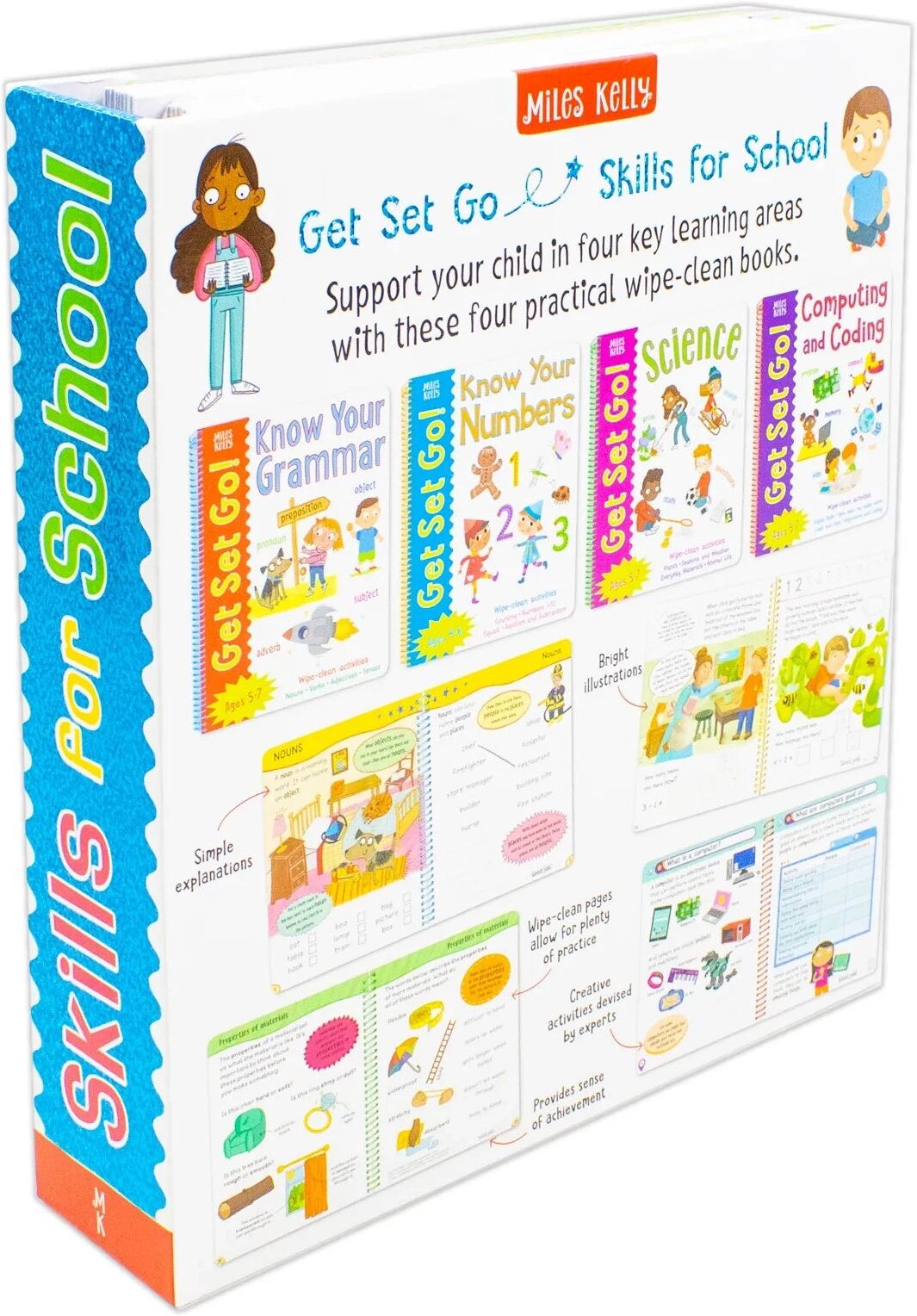
Miles Kelly Publishing Ltd. Get Set Go Skills for School 4 Wipe Clean Books Set Plus one Pen (Ages 4-7) (Computing and coding, Know your Numbers, Know Your Grammar & Science)Get Set Go Skills for School 4 Wipe Clean Books Set Help little learners build confidence before school with the Wipe Clean Workbooks: Get Set Go Skills for School Set of 4. Designed for children aged 4–7, this practical workbook collection supports key early learning areas through simple explanations, bright illustrations and fun wipe-clean activities that can be completed again and again. This set includes: Know Your Grammar Know Your Numbers Science Computing and Coding With wipe-clean pages and a handy pen included, children can practise essential skills, improve pencil control and enjoy a real sense of achievement as they learn. Perfect for home learning, school preparation, holiday activities or extra practice alongside classroom work.10,99 £*Shipping: 2,99 £Secure redirect to the provider
-
How can JavaScript be used for backend programming?
JavaScript can be used for backend programming through the use of runtime environments like Node.js. Node.js allows developers to write server-side code using JavaScript, enabling them to build scalable and efficient backend systems. With Node.js, developers can handle tasks such as server-side logic, database operations, and API integrations, making JavaScript a versatile language for full-stack development. Additionally, the npm ecosystem provides a wide range of libraries and modules that can be easily integrated into backend projects, further enhancing the capabilities of JavaScript for server-side programming. **
-
Is it possible to switch from backend to frontend?
Yes, it is possible to switch from backend to frontend development. While backend and frontend development require different skill sets and knowledge, many developers have successfully transitioned from one to the other. To make the switch, a developer may need to learn new programming languages, frameworks, and tools that are commonly used in frontend development. Additionally, gaining experience through personal projects or contributing to open-source projects can help in making a successful transition. Overall, with dedication and effort, it is definitely possible to switch from backend to frontend development. **
-
Do you learn coding or programming in school?
Yes, many schools offer coding or programming classes as part of their curriculum. These classes often start at a young age and continue through high school. Students may learn languages such as Python, Java, or HTML, and gain skills in problem-solving, logic, and critical thinking. Additionally, some schools offer extracurricular coding clubs or activities to further support students' interest in programming. **
-
What music do you listen to while programming?
I enjoy listening to instrumental music while programming, as it helps me focus without getting distracted by lyrics. Some of my favorite genres to listen to are lo-fi hip hop, ambient electronic, and classical music. I find that these types of music create a calming and productive atmosphere for me to work in. **
How do I create an IntelliJ project with frontend and backend?
To create an IntelliJ project with frontend and backend components, you can start by creating a new project in IntelliJ. For the backend, you can choose a Java project and set up your backend code using frameworks like Spring Boot. For the frontend, you can create a separate module within the same project and choose a frontend technology like React, Angular, or Vue.js. You can then link the frontend and backend components by making API calls from the frontend to the backend. This setup allows you to work on both the frontend and backend code within the same IntelliJ project. **
Is JavaScript suitable for backend web development?
Yes, JavaScript is suitable for backend web development. With the introduction of Node.js, JavaScript can now be used for server-side programming, making it a versatile language for both frontend and backend development. Node.js allows developers to build scalable and high-performance web applications using JavaScript, making it a popular choice for backend development. Additionally, JavaScript's asynchronous nature and event-driven architecture make it well-suited for handling multiple requests and real-time applications on the server side. **
Top-Angebote
Products related to Listen:
-
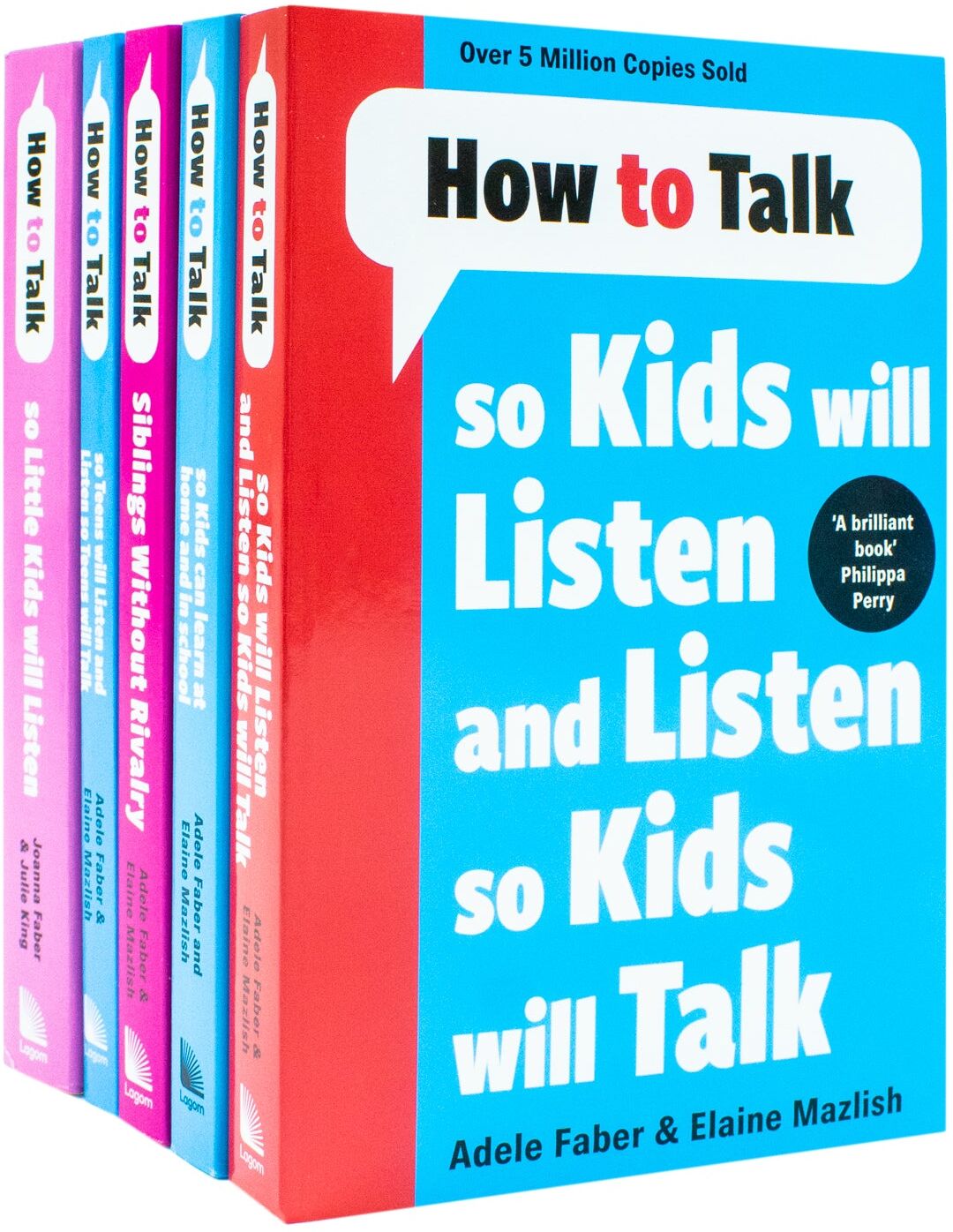
Piccadilly Press How To Talk Collection 5 Books Set How To Talk So Kids Will Listen How To Talk SeriesTitles In This Set: How to Talk So Kids Can Learn: At Home and in School How To Talk So Kids Will Listen and Listen So Kids Will Talk How to Talk So Teens Will Listen and Listen So Teens Will Talk How to Talk so Little Kids Will Listen: A Survival Guide to Life with Children Aged 2-7 Siblings Without Rivalry: How to Help Your Children Live Together So You Can Live Too How to Talk So Kids Can Learn: At Home and in SchoolFrom the widely-acclaimed HOW TO TALK series, leading parenting experts show how to motivate kids to learn. Using the unique communication strategies, down-to-earth dialogues, and cartoons that are the hallmark of their bestselling bookHow To Talk So Kids Will Listen and Listen So Kids Will TalkThe number one practical guide to making your family life less stressful and more rewarding.In this international bestseller, experts Adele Faber and Elaine Mazlish provide effective step by step techniques to help you improve and enrich your relationships with your children.How to Talk So Teens Will Listen and Listen So Teens Will TalkFrom curfews and cliques to sex and drugs, bestselling authors Faber and Mazlish give parents and teens the tools they need to communicate and navigate the often stormy years of adolescence. How to Talk so Little Kids Will Listen: A Survival Guide to Life with Children Aged 2-7From tantrums and food battles to anxieties and sleep issues. Parenting experts Julie King and Joanna Faber give insights and tried-and-tested strategies to navigate the everyday challenges of life with children aged 2-7.Siblings Without Rivalry: How to Help Your Children Live Together So You Can Live TooDiscover parenting experts Faber and Mazlish's tested and practical guidelines for how to cope with - and deflect - sibling rivalry. Full of humour and compassion, Siblings Without Rivalry challenges the idea that constant conflict between siblings is natural and unavoidable.The How to Talk 5 book collection is a fantastic series of books to help any parent with techniques on how to talk to their children and how to help their development. From parenting experts Adele Faber, Elaine Mazlish, Joanna Faber and Julie King, this set will guide anyone struggling to communicate with children and teens with anxieties, tantrums along with how to motivate and praise correctly. Related Products: Self Help Recovery Books16,99 £*Shipping: 2,99 £Secure redirect to the provider
-
Franklin Watts Sue Graves Behaviour Matters Series 10 Books Collection Set (Elephant Learns to Share, Lion's in a Flap, Monkey Needs to Listen, Tiger Has a Tantrum aTitles in this Collection: Elephant Learns to Share Lion's in a Flap Monkey Needs to Listen Tiger Has a Tantrum Panda Feels Jealous Croc Needs to Wait Rhino Learns to be Polite Zebra can Cope Hippo Owns Up Flamingo is Brave Elephant Learns to Share Elephant Learns to Share is a gentle introduction to the concept of how to share for young children. Elephant hates sharing anything. When Gran gives him a bat and ball set, he finds it impossible to play by himself. He needs to find friends to play with, but will anyone want to join his game? Lion's in a Flap Lion's in a Flap offers a gentle introduction to the concept of worries and anxieties and how to deal with them for young children. Lion is off on a school trip to Jungle Land - the most exciting theme park EVER! He should be thrilled, but he cannot stop worrying and it's ruining the trip for him. Can Miss Bird and his friends help him to relax and have fun? Monkey Needs to Listen Monkey Needs to Listen offers a gentle introduction to the concept of paying attention for young children. Monkey is so excited about a go-kart race that he doesn't listen to any of the instructions. He doesn't stop to check his kart and he nearly ruins the race for all the animals. Can Monkey learn to listen and pay attention or will the race be abandoned for good? Tiger Has a Tantrum Tiger Has a Tantrum offers a gentle introduction to the concept of emotions for young children. Tiger is in a terrible mood. He has been angry with everyone all day. Then Monkey accidentally chooses the book that Tiger wanted and Tiger has a full blown tantrum in the library. How can Miss Bird help Tiger to understand and manage his anger? Panda Feels Jealous Panda Feels Jealous offers a gentle introduction to the concept of jealousy, and being pleased with what you have, for young children. Panda often feels jealous. She is jealous of her brother and sister, and of things others can do that she can't. But when her jealousy makes her unkind, and her friends say they don't want to play with her, Panda is upset. Can she overcome her jealousy and start to feel happier? Croc Needs to Wait Croc Has to Wait is a gentle introduction to the importance of being patient and waiting your turn for young children. Croc can never wait for anything - he's alway interrupting, rushes everything and he can never wait to take his turn. Can he learn to slow down and be a little more patient? Rhino Learns to be Polite Rhino Learns to Be Polite offers a gentle introduction to the concept of manners for young children. Rhino does not have very nice manners, especially at the dinner table. But soon no one wants to sit near him at lunch time and he even misses out on tea at his friend's house. It is time for Rhino to bring out his very best manners! Zebra can Cope Zebra Can Cope offers a gentle introduction to the concept of resilience, and keeping trying, for young children. Zebra often worries about things. She worries whether she will cope if things don't go...17,99 £*Shipping: 2,99 £Secure redirect to the provider
-
Miles Kelly Publishing Ltd. Get Set Go Skills for School 4 Wipe Clean Books Set Plus one Pen (Ages 4-7) (Computing and coding, Know your Numbers, Know Your Grammar & Science)Get Set Go Skills for School 4 Wipe Clean Books Set Help little learners build confidence before school with the Wipe Clean Workbooks: Get Set Go Skills for School Set of 4. Designed for children aged 4–7, this practical workbook collection supports key early learning areas through simple explanations, bright illustrations and fun wipe-clean activities that can be completed again and again. This set includes: Know Your Grammar Know Your Numbers Science Computing and Coding With wipe-clean pages and a handy pen included, children can practise essential skills, improve pencil control and enjoy a real sense of achievement as they learn. Perfect for home learning, school preparation, holiday activities or extra practice alongside classroom work.10,99 £*Shipping: 2,99 £Secure redirect to the provider
-
What is the programming language for website programming in the frontend and backend?
The programming language for website programming in the frontend is typically HTML, CSS, and JavaScript. These languages are used to create the structure, style, and interactivity of a website. In the backend, programming languages such as Python, Ruby, PHP, and JavaScript (Node.js) are commonly used to handle server-side operations, database interactions, and other backend functionalities. **
-
How can one use JavaScript for backend programming?
JavaScript can be used for backend programming by utilizing runtime environments like Node.js. Node.js allows developers to run JavaScript code on the server-side, enabling them to build backend applications. With Node.js, developers can create servers, handle requests, interact with databases, and perform other backend tasks using JavaScript. Additionally, Node.js has a vast ecosystem of libraries and frameworks that make backend development efficient and scalable. **
-
How can JavaScript be used for backend programming?
JavaScript can be used for backend programming through the use of runtime environments like Node.js. Node.js allows developers to write server-side code using JavaScript, enabling them to build scalable and efficient backend systems. With Node.js, developers can handle tasks such as server-side logic, database operations, and API integrations, making JavaScript a versatile language for full-stack development. Additionally, the npm ecosystem provides a wide range of libraries and modules that can be easily integrated into backend projects, further enhancing the capabilities of JavaScript for server-side programming. **
-
Is it possible to switch from backend to frontend?
Yes, it is possible to switch from backend to frontend development. While backend and frontend development require different skill sets and knowledge, many developers have successfully transitioned from one to the other. To make the switch, a developer may need to learn new programming languages, frameworks, and tools that are commonly used in frontend development. Additionally, gaining experience through personal projects or contributing to open-source projects can help in making a successful transition. Overall, with dedication and effort, it is definitely possible to switch from backend to frontend development. **
Similar search terms for Listen
-
Do you learn coding or programming in school?
Yes, many schools offer coding or programming classes as part of their curriculum. These classes often start at a young age and continue through high school. Students may learn languages such as Python, Java, or HTML, and gain skills in problem-solving, logic, and critical thinking. Additionally, some schools offer extracurricular coding clubs or activities to further support students' interest in programming. **
-
What music do you listen to while programming?
I enjoy listening to instrumental music while programming, as it helps me focus without getting distracted by lyrics. Some of my favorite genres to listen to are lo-fi hip hop, ambient electronic, and classical music. I find that these types of music create a calming and productive atmosphere for me to work in. **
-
How do I create an IntelliJ project with frontend and backend?
To create an IntelliJ project with frontend and backend components, you can start by creating a new project in IntelliJ. For the backend, you can choose a Java project and set up your backend code using frameworks like Spring Boot. For the frontend, you can create a separate module within the same project and choose a frontend technology like React, Angular, or Vue.js. You can then link the frontend and backend components by making API calls from the frontend to the backend. This setup allows you to work on both the frontend and backend code within the same IntelliJ project. **
-
Is JavaScript suitable for backend web development?
Yes, JavaScript is suitable for backend web development. With the introduction of Node.js, JavaScript can now be used for server-side programming, making it a versatile language for both frontend and backend development. Node.js allows developers to build scalable and high-performance web applications using JavaScript, making it a popular choice for backend development. Additionally, JavaScript's asynchronous nature and event-driven architecture make it well-suited for handling multiple requests and real-time applications on the server side. **
* All prices are inclusive of VAT and, if applicable, plus shipping costs. The offer information is based on the details provided by the respective shop and is updated through automated processes. Real-time updates do not occur, so deviations can occur in individual cases. ** Note: Parts of this content were created by AI.