Buy js-school.eu ?
We are moving the project
js-school.eu .
Are you interested in purchasing the domain
js-school.eu ?
domain@kv-gmbh.de · 0541-91531010
Buy js-school.eu ?
What is the programming language for website programming in the frontend and backend?
The programming language for website programming in the frontend is typically HTML, CSS, and JavaScript. These languages are used to create the structure, style, and interactivity of a website. In the backend, programming languages such as Python, Ruby, PHP, and JavaScript (Node.js) are commonly used to handle server-side operations, database interactions, and other backend functionalities. **
How can one use JavaScript for backend programming?
JavaScript can be used for backend programming by utilizing runtime environments like Node.js. Node.js allows developers to run JavaScript code on the server-side, enabling them to build backend applications. With Node.js, developers can create servers, handle requests, interact with databases, and perform other backend tasks using JavaScript. Additionally, Node.js has a vast ecosystem of libraries and frameworks that make backend development efficient and scalable. **
Similar search terms for Imaging
Top-Angebote
Products related to Imaging:
-
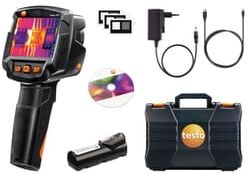
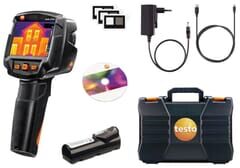
Testo 868s Thermal Imaging CameraTesto 868s Thermal Imaging Camera (0560 8684) The Testo 868s Thermal Imaging Camera delivers outstanding thermal performance and smart connectivity, making it a strong choice for HVAC engineers, electricians and building inspectors. With a 160 x 120 pixel infrared resolution (enhanced to 320 x 240 with SuperResolution) and a wide temperature detection range from -30°C to +650°C, this thermal imager captures sharp, accurate heat signatures across a variety of applications. Designed to detect insulation defects, thermal bridges, overheating electrical components and leaks, the 868s features thermal sensitivity of 0.08°C (80mK) for pinpoint precision. Built-in tools like automatic hot/cold spot recognition, testo ScaleAssist and ε-Assist ensure fast, consistent results with optimised colour scaling and emissivity settings. With integrated Wi1218,00 £*Shipping: 0,00 £Secure redirect to the provider
-
Testo 865s Thermal Imaging CameraTesto 865s - Thermal Imaging Camera (160 x 120 pixels) – Precision, Efficiency & User-Friendly Technology The Testo 865s Thermal Imaging Camera is engineered for professionals, offering high-resolution thermography and essential functions tailored for a contractor's daily work. Designed for fast, efficient use, this thermal imager features advanced ScaleAssist technology to automatically adjust the thermal image scale for building thermography, while the integrated IFOV Warner ensures accurate measurements by displaying the measurement spot size on the thermal image. The Testo 865s guarantees accurate infrared images for maintenance, quality assurance, and production control. Key Applications of the Testo 865s Thermal Imager:792,00 £*Shipping: 0,00 £Secure redirect to the provider


-
How can JavaScript be used for backend programming?
JavaScript can be used for backend programming through the use of runtime environments like Node.js. Node.js allows developers to write server-side code using JavaScript, enabling them to build scalable and efficient backend systems. With Node.js, developers can handle tasks such as server-side logic, database operations, and API integrations, making JavaScript a versatile language for full-stack development. Additionally, the npm ecosystem provides a wide range of libraries and modules that can be easily integrated into backend projects, further enhancing the capabilities of JavaScript for server-side programming. **
-
What is magnetic resonance imaging (MRI)?
Magnetic resonance imaging (MRI) is a non-invasive medical imaging technique that uses a strong magnetic field and radio waves to generate detailed images of the inside of the body. It provides high-resolution images of soft tissues, organs, and structures, making it a valuable tool for diagnosing a wide range of conditions. MRI is commonly used to detect abnormalities in the brain, spine, joints, and internal organs, and is particularly useful for evaluating the brain and spinal cord. **
-
How does a thermal imaging camera work?
A thermal imaging camera works by detecting the heat emitted by an object or person and converting it into a visible image. This is done using a special lens that focuses the infrared light emitted by objects onto a detector, which then converts the information into an electronic signal. The camera then processes this signal to create a visual representation of the heat patterns, with warmer areas appearing as lighter colors and cooler areas as darker colors. This allows the camera to capture and display the thermal energy emitted by objects, making it useful for various applications such as night vision, building inspections, and medical diagnostics. **
-
Is it worth buying a thermal imaging camera?
It depends on your specific needs and intended use. Thermal imaging cameras can be valuable tools for various applications such as home inspections, electrical troubleshooting, and hunting. They can help identify issues that are not visible to the naked eye, potentially saving time and money in the long run. However, they can be expensive, so it's important to consider whether the benefits outweigh the cost for your particular situation. **

Where can I rent a thermal imaging camera?
You can rent a thermal imaging camera from various equipment rental companies, specialized camera rental shops, or online rental platforms. Some hardware stores or home improvement stores may also offer thermal imaging cameras for rent. Make sure to compare prices, availability, and rental terms before making a decision on where to rent the camera. **
How can a thermal imaging camera penetrate materials?
A thermal imaging camera can penetrate materials because it detects the infrared radiation emitted by objects and materials. This radiation is produced by the heat energy that all objects and materials emit as a result of their temperature. The camera's sensors can detect this radiation and convert it into a visual image, allowing the camera to "see" through materials and capture the heat signatures of objects behind them. This makes thermal imaging cameras useful for various applications, such as detecting heat leaks in buildings, locating hot spots in electrical systems, and even identifying objects in low visibility conditions. **
Top-Angebote
Products related to Imaging:
-
Testo 871s Thermal Imaging CameraTesto 871s Thermal Imaging Camera (0560 8716) The Testo 871s Thermal Imaging Camera is a professional choice for high-resolution thermography, wireless connectivity and real-time data integration. With an infrared resolution of 240 x 180 pixels (boosted to 480 x 360 with SuperResolution), it captures sharp thermal images, well suited to HVAC, electrical and building diagnostics. The 871s offers a temperature detection range from -30°C to +650°C with thermal sensitivity of 80mK (0.08°C) — higher sensitivity than the 865s and 868s, useful where spotting smaller temperature differences matters, such as preventative maintenance monitoring. It features a 35° x 26° field of view for inspecting large areas quickly, with automatic hot/cold spot detection highlighting problem zones instantly. Via Bluetooth, it pairs with the Testo 770-3 Clamp M2218,80 £*Shipping: 0,00 £Secure redirect to the provider
-
Testo 872s Thermal Imaging CameraTesto 872s Thermal Imaging Camera (0560 8725) The Testo 872s Thermal Imaging Camera delivers industry-leading thermal resolution, precision and smart connectivity, making it a strong tool for HVAC technicians, electricians, industrial engineers and building inspectors. With a high infrared resolution of 320 x 240 pixels (enhanced to 640 x 480 pixels via SuperResolution), the 872s captures ultra-sharp thermal images, allowing precise detection of faults in electrical systems, insulation, machinery and structures. Equipped with an integrated laser marker, the 872s highlights the exact measuring point in real time, making on-site analysis fast, accurate and traceable. With thermal sensitivity of 0.05°C (50mK) and a temperature range from -30°C to +650°C, even the smallest heat differences are visible, useful for preventive maintenance and failure det2448,00 £*Shipping: 0,00 £Secure redirect to the provider
-
Testo 868s Thermal Imaging CameraTesto 868s Thermal Imaging Camera (0560 8684) The Testo 868s Thermal Imaging Camera delivers outstanding thermal performance and smart connectivity, making it a strong choice for HVAC engineers, electricians and building inspectors. With a 160 x 120 pixel infrared resolution (enhanced to 320 x 240 with SuperResolution) and a wide temperature detection range from -30°C to +650°C, this thermal imager captures sharp, accurate heat signatures across a variety of applications. Designed to detect insulation defects, thermal bridges, overheating electrical components and leaks, the 868s features thermal sensitivity of 0.08°C (80mK) for pinpoint precision. Built-in tools like automatic hot/cold spot recognition, testo ScaleAssist and ε-Assist ensure fast, consistent results with optimised colour scaling and emissivity settings. With integrated Wi1218,00 £*Shipping: 0,00 £Secure redirect to the provider
-
What is the programming language for website programming in the frontend and backend?
The programming language for website programming in the frontend is typically HTML, CSS, and JavaScript. These languages are used to create the structure, style, and interactivity of a website. In the backend, programming languages such as Python, Ruby, PHP, and JavaScript (Node.js) are commonly used to handle server-side operations, database interactions, and other backend functionalities. **
-
How can one use JavaScript for backend programming?
JavaScript can be used for backend programming by utilizing runtime environments like Node.js. Node.js allows developers to run JavaScript code on the server-side, enabling them to build backend applications. With Node.js, developers can create servers, handle requests, interact with databases, and perform other backend tasks using JavaScript. Additionally, Node.js has a vast ecosystem of libraries and frameworks that make backend development efficient and scalable. **
-
How can JavaScript be used for backend programming?
JavaScript can be used for backend programming through the use of runtime environments like Node.js. Node.js allows developers to write server-side code using JavaScript, enabling them to build scalable and efficient backend systems. With Node.js, developers can handle tasks such as server-side logic, database operations, and API integrations, making JavaScript a versatile language for full-stack development. Additionally, the npm ecosystem provides a wide range of libraries and modules that can be easily integrated into backend projects, further enhancing the capabilities of JavaScript for server-side programming. **
-
What is magnetic resonance imaging (MRI)?
Magnetic resonance imaging (MRI) is a non-invasive medical imaging technique that uses a strong magnetic field and radio waves to generate detailed images of the inside of the body. It provides high-resolution images of soft tissues, organs, and structures, making it a valuable tool for diagnosing a wide range of conditions. MRI is commonly used to detect abnormalities in the brain, spine, joints, and internal organs, and is particularly useful for evaluating the brain and spinal cord. **
Similar search terms for Imaging
-
Testo 865s Thermal Imaging CameraTesto 865s - Thermal Imaging Camera (160 x 120 pixels) – Precision, Efficiency & User-Friendly Technology The Testo 865s Thermal Imaging Camera is engineered for professionals, offering high-resolution thermography and essential functions tailored for a contractor's daily work. Designed for fast, efficient use, this thermal imager features advanced ScaleAssist technology to automatically adjust the thermal image scale for building thermography, while the integrated IFOV Warner ensures accurate measurements by displaying the measurement spot size on the thermal image. The Testo 865s guarantees accurate infrared images for maintenance, quality assurance, and production control. Key Applications of the Testo 865s Thermal Imager:792,00 £*Shipping: 0,00 £Secure redirect to the provider
-
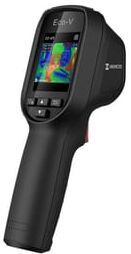
Hikmicro ECO-V Thermal Imaging CameraHikmicro ECO-V Thermal Imaging Camera The Hikmicro ECO-V Thermal Imaging Camera is a compact, rugged, professional tool for building inspections, HVAC troubleshooting, electrical diagnostics and maintenance work. With its dual camera system (thermal + visual) and Fusion mode, visual detail can be blended with thermal imagery for sharper, more actionable results. Featuring a 96 x 96 IR sensor (9,216 pixels) enhanced to 240 x 240 (57,600 pixels) with SuperIR, the ECO-V delivers high-clarity thermal images at a smooth 25Hz refresh rate. A wide 50° field of view suits scanning large areas quickly, and a temperature measurement range of -20°C to 550°C with ±2°C/±2% accuracy suits both residential and industrial applications. Built tough with IP54 dust/water protection and 2m drop resistance, the ECO-V is designed for real-world fieldwork.250,80 £*Shipping: 0,00 £Secure redirect to the provider
-
Hikmicro B20S Handheld Thermal Imaging CameraHikmicro B20S Handheld Thermal Imaging Camera The Hikmicro B20S Handheld Thermal Camera is a compact, high-performance thermal imager for HVAC technicians, building inspectors, electricians and automotive engineers. With a 256 x 192 infrared detector (49,152 pixels),610,80 £*Shipping: 0,00 £Secure redirect to the provider
-
How does a thermal imaging camera work?
A thermal imaging camera works by detecting the heat emitted by an object or person and converting it into a visible image. This is done using a special lens that focuses the infrared light emitted by objects onto a detector, which then converts the information into an electronic signal. The camera then processes this signal to create a visual representation of the heat patterns, with warmer areas appearing as lighter colors and cooler areas as darker colors. This allows the camera to capture and display the thermal energy emitted by objects, making it useful for various applications such as night vision, building inspections, and medical diagnostics. **
-
Is it worth buying a thermal imaging camera?
It depends on your specific needs and intended use. Thermal imaging cameras can be valuable tools for various applications such as home inspections, electrical troubleshooting, and hunting. They can help identify issues that are not visible to the naked eye, potentially saving time and money in the long run. However, they can be expensive, so it's important to consider whether the benefits outweigh the cost for your particular situation. **
-
Where can I rent a thermal imaging camera?
You can rent a thermal imaging camera from various equipment rental companies, specialized camera rental shops, or online rental platforms. Some hardware stores or home improvement stores may also offer thermal imaging cameras for rent. Make sure to compare prices, availability, and rental terms before making a decision on where to rent the camera. **
-
How can a thermal imaging camera penetrate materials?
A thermal imaging camera can penetrate materials because it detects the infrared radiation emitted by objects and materials. This radiation is produced by the heat energy that all objects and materials emit as a result of their temperature. The camera's sensors can detect this radiation and convert it into a visual image, allowing the camera to "see" through materials and capture the heat signatures of objects behind them. This makes thermal imaging cameras useful for various applications, such as detecting heat leaks in buildings, locating hot spots in electrical systems, and even identifying objects in low visibility conditions. **
* All prices are inclusive of VAT and, if applicable, plus shipping costs. The offer information is based on the details provided by the respective shop and is updated through automated processes. Real-time updates do not occur, so deviations can occur in individual cases. ** Note: Parts of this content were created by AI.