Buy js-school.eu ?
We are moving the project
js-school.eu .
Are you interested in purchasing the domain
js-school.eu ?
domain@kv-gmbh.de · 0541-91531010
Buy js-school.eu ?
What is the programming language for website programming in the frontend and backend?
The programming language for website programming in the frontend is typically HTML, CSS, and JavaScript. These languages are used to create the structure, style, and interactivity of a website. In the backend, programming languages such as Python, Ruby, PHP, and JavaScript (Node.js) are commonly used to handle server-side operations, database interactions, and other backend functionalities. **
How can one use JavaScript for backend programming?
JavaScript can be used for backend programming by utilizing runtime environments like Node.js. Node.js allows developers to run JavaScript code on the server-side, enabling them to build backend applications. With Node.js, developers can create servers, handle requests, interact with databases, and perform other backend tasks using JavaScript. Additionally, Node.js has a vast ecosystem of libraries and frameworks that make backend development efficient and scalable. **

Similar search terms for Threaded
Top-Angebote
Products related to Threaded:
-
How can JavaScript be used for backend programming?
JavaScript can be used for backend programming through the use of runtime environments like Node.js. Node.js allows developers to write server-side code using JavaScript, enabling them to build scalable and efficient backend systems. With Node.js, developers can handle tasks such as server-side logic, database operations, and API integrations, making JavaScript a versatile language for full-stack development. Additionally, the npm ecosystem provides a wide range of libraries and modules that can be easily integrated into backend projects, further enhancing the capabilities of JavaScript for server-side programming. **
-
What is a threaded bolt?
A threaded bolt is a type of fastener that consists of a long, externally threaded shaft with a head at one end. The threaded shaft allows the bolt to be inserted into a pre-drilled hole and secured with a nut on the other end. Threaded bolts are commonly used in construction, manufacturing, and mechanical applications to join two or more components together. They come in various sizes, materials, and thread types to suit different requirements. **
-
Which screws are better to build a wooden shelf, fine-threaded or coarse-threaded?
For building a wooden shelf, coarse-threaded screws are generally better. Coarse-threaded screws have deeper and more widely spaced threads, which provide better grip and holding power in wood. They are less likely to strip or break the wood fibers, making them more suitable for heavier loads and structural support. Fine-threaded screws are better suited for materials like metal or plastic, where a finer thread pitch is needed for a secure hold. **
-
Is there an adapter from a threaded faucet to a threaded washing machine water connection?
Yes, there are adapters available that can connect a threaded faucet to a threaded washing machine water connection. These adapters typically have a male threaded end that can screw onto the faucet and a female threaded end that can connect to the washing machine hose. They are commonly available at hardware stores or online and can help to easily connect a washing machine to a threaded faucet. **
How can you glue threaded rods?
To glue threaded rods, you can use a strong epoxy adhesive that is designed to bond metal surfaces. Make sure to clean the surface of the threaded rod thoroughly before applying the adhesive to ensure a strong bond. Apply the epoxy to the threads of the rod and then screw it into place in the desired location. Allow the adhesive to cure according to the manufacturer's instructions before putting any weight or stress on the rod. **
Which screws are better to use to build a wooden shelf, fine-threaded or coarse-threaded?
For building a wooden shelf, it is generally better to use coarse-threaded screws. Coarse-threaded screws have larger threads that provide better grip and hold in wood more securely, making them less likely to strip or pull out. Fine-threaded screws are better suited for materials like metal or plastic where a tighter grip is needed. **
Top-Angebote
Products related to Threaded:
-
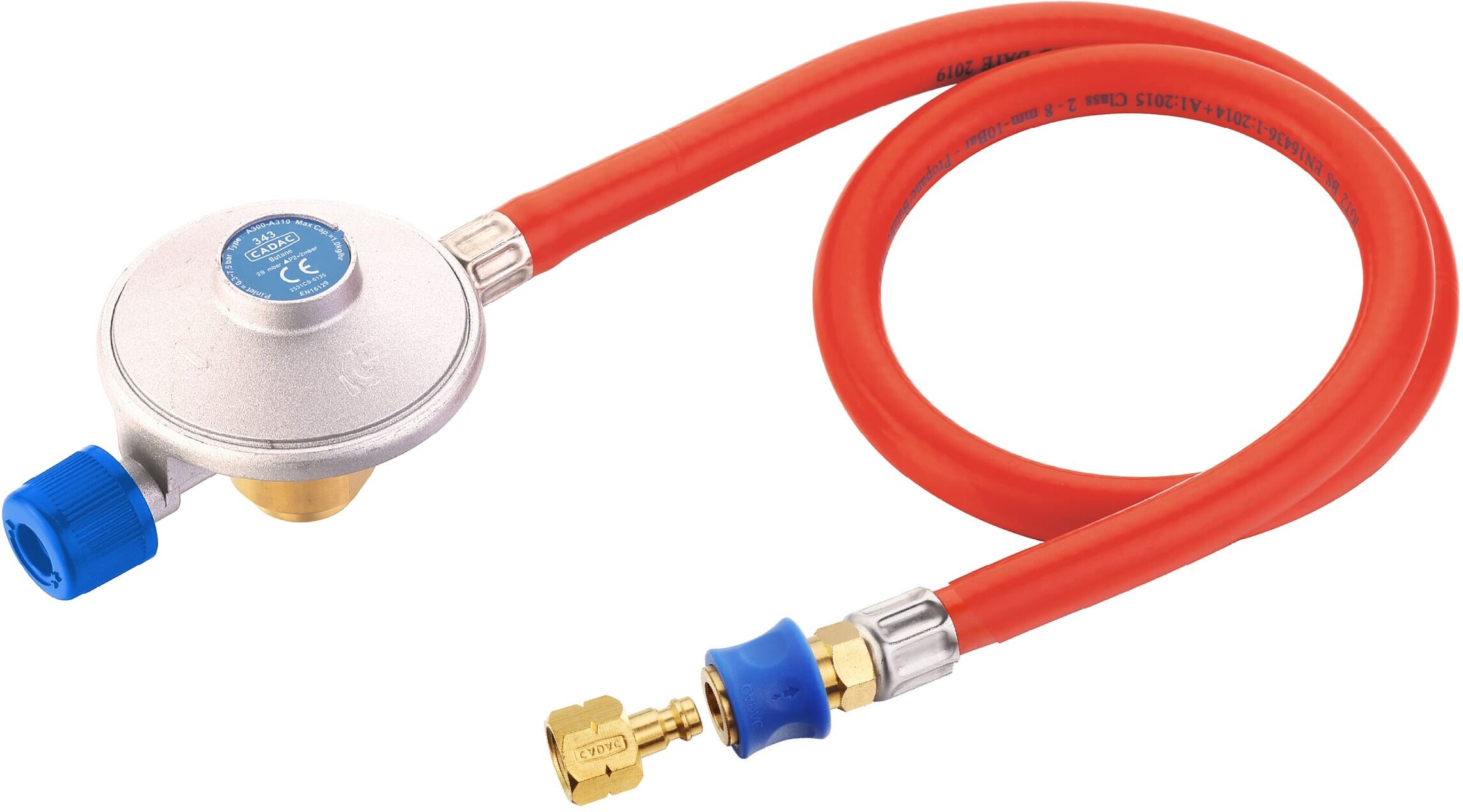
Cadac Threaded Cartridge RegulatorCadac Threaded Cartridge Regulator - EN417 Gas Cartridge Regulator for Your Cadac LP BBQ This is a super lightweight, screw on gas regulator that attaches to a standard EN417 threaded cartridge and hooks up to your Cadac LP BBQ via a standard thread connection. You get an 85cm hose and a tailpiece with a handwheel on it, making it perfect for the 2 Cook 3 Classic Stove and Safari Chef 30 LP Deluxe. Just one thing to watch - it won't work with BBQs that have a quick release (QR) connection built-in. For those quick little trips out - a picnic, a day at the beach or a short camping stay - a single EN417 threaded cartridge and this tidy regulator is all you need. Just chuck the regulator onto the cartridge, give the tailpiece a quick hand-tighten to the BBQ, and you're ready to fire up your BBQ - no nasty gas cylinder to lug around, no faffing about wit19,99 £*Shipping: 5,00 £Secure redirect to the provider
-
Cadac Threaded Cartridge Regulator QRCadac Threaded Cartridge Regulator - QR: a Compact EN417 Gas Regulator with a Quick Release A snappy little regulator thats easy to screw on - it connects an EN417 threaded cartridge to your Cadac LP BBQ with a quick release fitting, and it comes with an 85cm hose and QR connector. Ideal for the Safari Chef 30 LP QR - perfect for a day out, a camping trip or a beach holiday when you dont need a full gas cylinder. Not every trip calls for a full gas cylinder. For a picnic, or a day at the beach, or a short camping trip, a single EN417 threaded cartridge and this wee regulator is all you need to get your Cadac LP BBQ fired up. The regulator screws straight onto the cartridge, delivers a nice steady flow of LP gas through that 85cm hose, and clips onto the BBQ via the quick release connector in 2 seconds flat - no tools, no messing around. At 0.22,50 £*Shipping: 5,00 £Secure redirect to the provider
-
What is the programming language for website programming in the frontend and backend?
The programming language for website programming in the frontend is typically HTML, CSS, and JavaScript. These languages are used to create the structure, style, and interactivity of a website. In the backend, programming languages such as Python, Ruby, PHP, and JavaScript (Node.js) are commonly used to handle server-side operations, database interactions, and other backend functionalities. **
-
How can one use JavaScript for backend programming?
JavaScript can be used for backend programming by utilizing runtime environments like Node.js. Node.js allows developers to run JavaScript code on the server-side, enabling them to build backend applications. With Node.js, developers can create servers, handle requests, interact with databases, and perform other backend tasks using JavaScript. Additionally, Node.js has a vast ecosystem of libraries and frameworks that make backend development efficient and scalable. **
-
How can JavaScript be used for backend programming?
JavaScript can be used for backend programming through the use of runtime environments like Node.js. Node.js allows developers to write server-side code using JavaScript, enabling them to build scalable and efficient backend systems. With Node.js, developers can handle tasks such as server-side logic, database operations, and API integrations, making JavaScript a versatile language for full-stack development. Additionally, the npm ecosystem provides a wide range of libraries and modules that can be easily integrated into backend projects, further enhancing the capabilities of JavaScript for server-side programming. **
-
What is a threaded bolt?
A threaded bolt is a type of fastener that consists of a long, externally threaded shaft with a head at one end. The threaded shaft allows the bolt to be inserted into a pre-drilled hole and secured with a nut on the other end. Threaded bolts are commonly used in construction, manufacturing, and mechanical applications to join two or more components together. They come in various sizes, materials, and thread types to suit different requirements. **
Similar search terms for Threaded
-
Which screws are better to build a wooden shelf, fine-threaded or coarse-threaded?
For building a wooden shelf, coarse-threaded screws are generally better. Coarse-threaded screws have deeper and more widely spaced threads, which provide better grip and holding power in wood. They are less likely to strip or break the wood fibers, making them more suitable for heavier loads and structural support. Fine-threaded screws are better suited for materials like metal or plastic, where a finer thread pitch is needed for a secure hold. **
-
Is there an adapter from a threaded faucet to a threaded washing machine water connection?
Yes, there are adapters available that can connect a threaded faucet to a threaded washing machine water connection. These adapters typically have a male threaded end that can screw onto the faucet and a female threaded end that can connect to the washing machine hose. They are commonly available at hardware stores or online and can help to easily connect a washing machine to a threaded faucet. **
-
How can you glue threaded rods?
To glue threaded rods, you can use a strong epoxy adhesive that is designed to bond metal surfaces. Make sure to clean the surface of the threaded rod thoroughly before applying the adhesive to ensure a strong bond. Apply the epoxy to the threads of the rod and then screw it into place in the desired location. Allow the adhesive to cure according to the manufacturer's instructions before putting any weight or stress on the rod. **
-
Which screws are better to use to build a wooden shelf, fine-threaded or coarse-threaded?
For building a wooden shelf, it is generally better to use coarse-threaded screws. Coarse-threaded screws have larger threads that provide better grip and hold in wood more securely, making them less likely to strip or pull out. Fine-threaded screws are better suited for materials like metal or plastic where a tighter grip is needed. **
* All prices are inclusive of VAT and, if applicable, plus shipping costs. The offer information is based on the details provided by the respective shop and is updated through automated processes. Real-time updates do not occur, so deviations can occur in individual cases. ** Note: Parts of this content were created by AI.