Buy js-school.eu ?
We are moving the project
js-school.eu .
Are you interested in purchasing the domain
js-school.eu ?
domain@kv-gmbh.de · 0541-91531010
Buy js-school.eu ?
What are the effects of non-coding DNA segments on traits?
Non-coding DNA segments, also known as non-coding regions or junk DNA, were once thought to have no functional significance. However, recent research has shown that non-coding DNA can have important regulatory roles in gene expression and can influence traits. For example, non-coding DNA can contain regulatory elements that control when and where genes are turned on and off, ultimately affecting an organism's traits. Additionally, non-coding DNA can also contribute to genetic variation and evolution by serving as a source of genetic diversity. Overall, non-coding DNA segments play a crucial role in shaping an organism's traits and genetic makeup. **
What is the programming language for website programming in the frontend and backend?
The programming language for website programming in the frontend is typically HTML, CSS, and JavaScript. These languages are used to create the structure, style, and interactivity of a website. In the backend, programming languages such as Python, Ruby, PHP, and JavaScript (Node.js) are commonly used to handle server-side operations, database interactions, and other backend functionalities. **

Similar search terms for Segments
Top-Angebote
Products related to Segments:
-
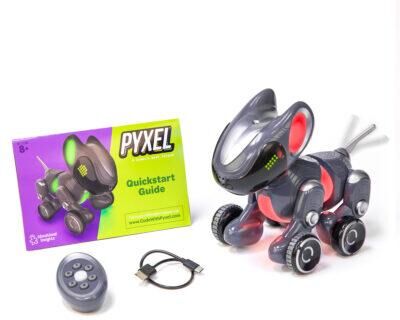
Learning Resources Pyxel The Coding PetKids use a computer or tablet to program this four-legged friend, then send their commands to the included remote to make the pet move, “talk”, and change facial expressions. Includes Coding Pet, user interface, and remote-activator unit. Pyxel The...124,99 $*Shipping: 0,00 $Secure redirect to the provider
-
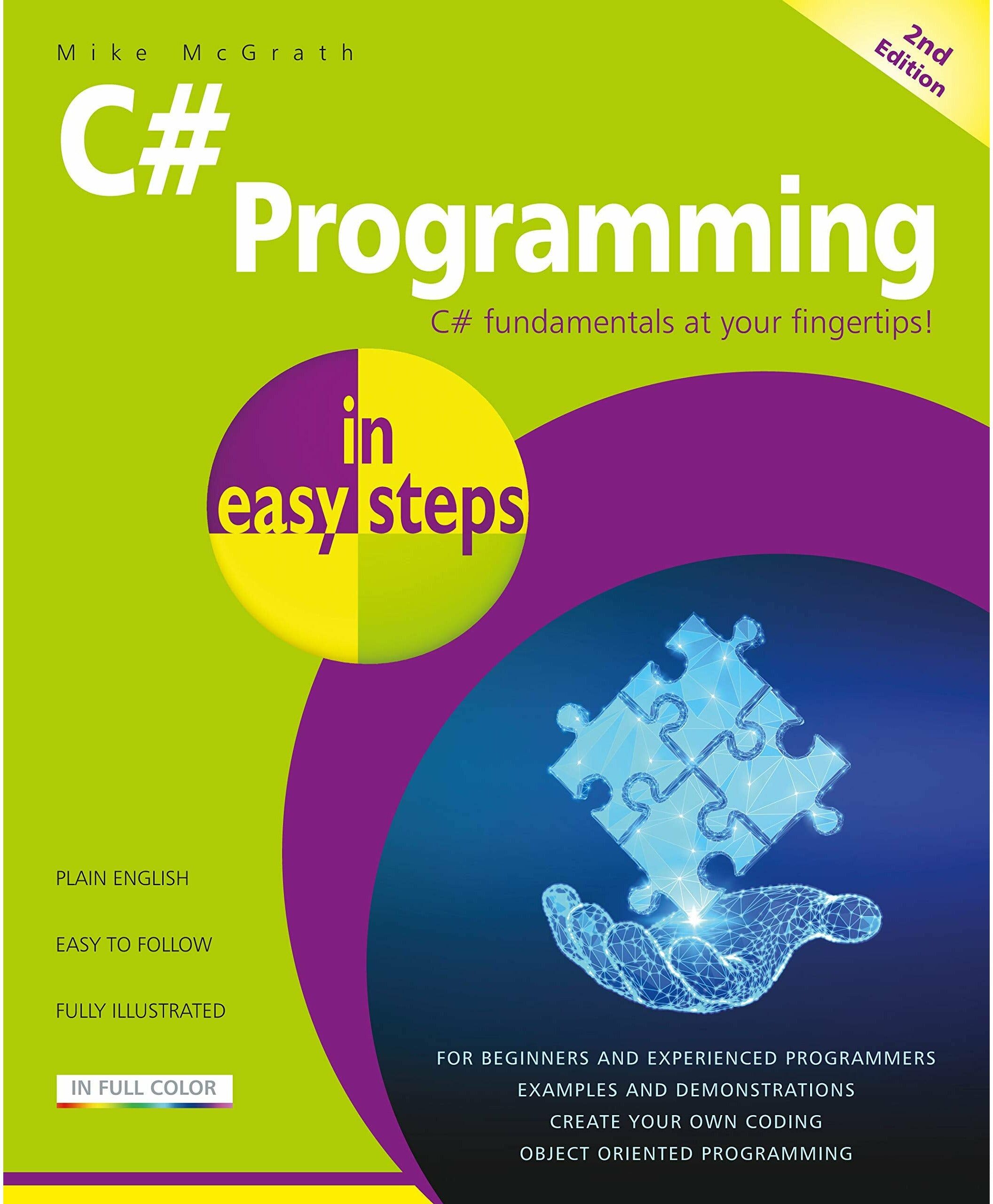
In Easy Steps Limited C# Programming in easy steps, 2nd edition by Mike McGrathC# Programming in easy steps, 2nd edition will teach you to code applications, and demonstrates every aspect of the C# language you will need to produce professional programming results. Its examples provide clear syntax-highlighted code showing C# language basics including variables, arrays, logic, looping, methods, and classes. C# Programming in easy steps, 2nd edition begins by explaining how to install the free Visual Studio Community Edition, to create an environment in which you can quickly begin to create your own executable programs by copying the book's examples. It demonstrates all the C# language basics before moving on to provide examples of Object Oriented Programming. The book concludes by demonstrating how you can use your acquired knowledge to create graphic programs for traditional PC Desktop apps, and also as Universal apps for multiple devices. C# Programming in easy steps, 2nd edition has an easy-to-follow style that will appeal to: Anyone who wants to begin programming in C# The programmer who quickly wants to add C# to their skills set The hobbyist who wants to begin creating apps for their own computer The student, and to those seeking a career in computing, who need a fundamental understanding of C# programming Table of contents: Getting started Storing values Performing operations Making statements Devising methods Handling strings Accessing files Solving problems Creating objects Controlling events Building an application Targeting devices4,98 £*Shipping: 1,99 £Secure redirect to the provider
-
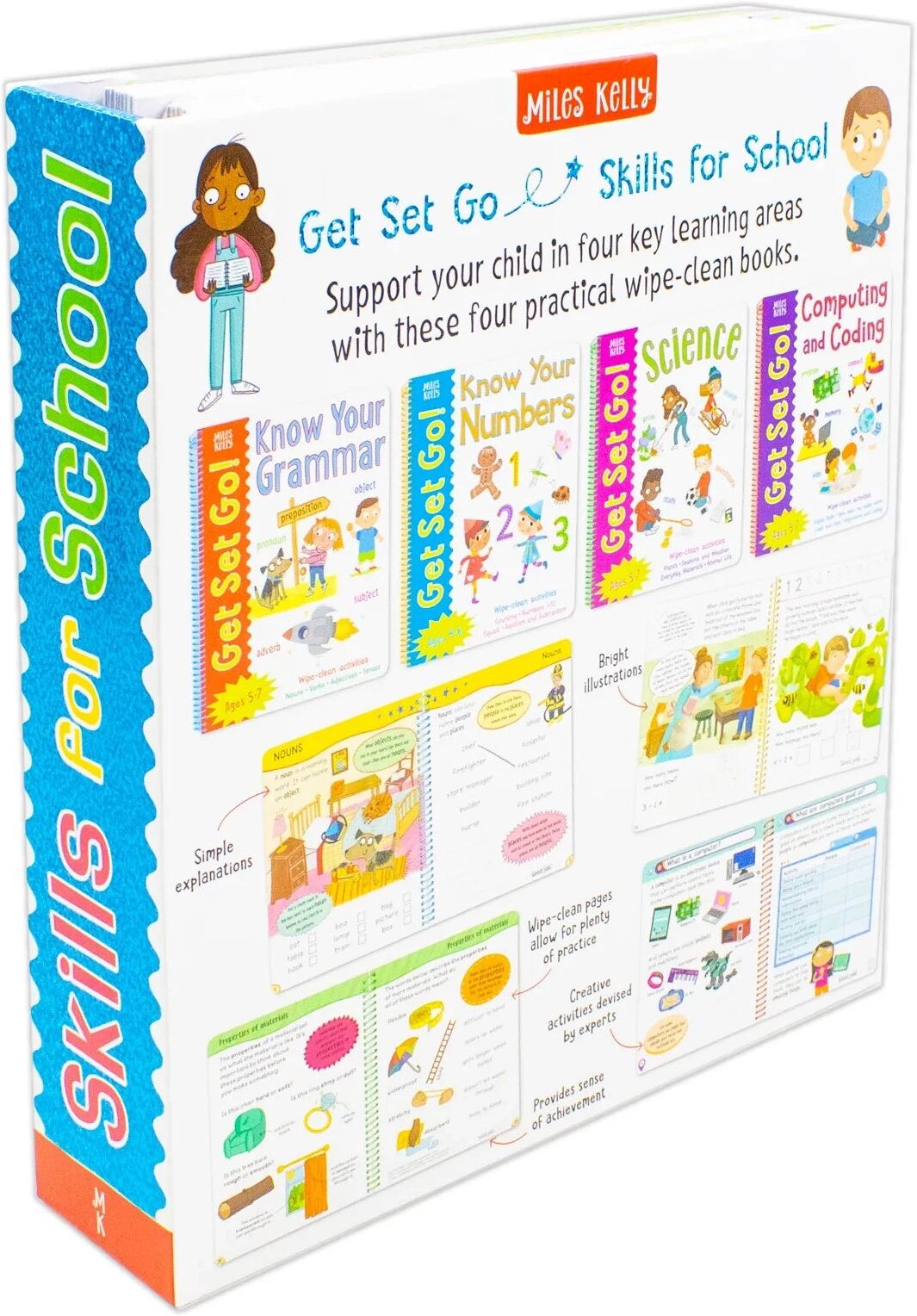
Miles Kelly Publishing Ltd. Get Set Go Skills for School 4 Wipe Clean Books Set Plus one Pen (Ages 4-7) (Computing and coding, Know your Numbers, Know Your Grammar & Science)Get Set Go Skills for School 4 Wipe Clean Books Set Help little learners build confidence before school with the Wipe Clean Workbooks: Get Set Go Skills for School Set of 4. Designed for children aged 4–7, this practical workbook collection supports key early learning areas through simple explanations, bright illustrations and fun wipe-clean activities that can be completed again and again. This set includes: Know Your Grammar Know Your Numbers Science Computing and Coding With wipe-clean pages and a handy pen included, children can practise essential skills, improve pencil control and enjoy a real sense of achievement as they learn. Perfect for home learning, school preparation, holiday activities or extra practice alongside classroom work.10,99 £*Shipping: 2,99 £Secure redirect to the provider

-
How can one use JavaScript for backend programming?
JavaScript can be used for backend programming by utilizing runtime environments like Node.js. Node.js allows developers to run JavaScript code on the server-side, enabling them to build backend applications. With Node.js, developers can create servers, handle requests, interact with databases, and perform other backend tasks using JavaScript. Additionally, Node.js has a vast ecosystem of libraries and frameworks that make backend development efficient and scalable. **
-
How can JavaScript be used for backend programming?
JavaScript can be used for backend programming through the use of runtime environments like Node.js. Node.js allows developers to write server-side code using JavaScript, enabling them to build scalable and efficient backend systems. With Node.js, developers can handle tasks such as server-side logic, database operations, and API integrations, making JavaScript a versatile language for full-stack development. Additionally, the npm ecosystem provides a wide range of libraries and modules that can be easily integrated into backend projects, further enhancing the capabilities of JavaScript for server-side programming. **
-
How do you calculate spherical segments?
To calculate the volume of a spherical segment, you first need to determine the height of the segment (h) and the radius of the sphere (r). Then, you can use the formula V = (1/6)πh(3r^2 + h^2) to find the volume. To calculate the surface area of a spherical segment, you need to know the radius of the sphere (r), the height of the segment (h), and the angle at the center of the sphere that defines the segment (θ). You can then use the formula A = 2πrh + (r^2(θ - sinθ)) to calculate the surface area. **
-
How do you calculate tangent segments?
To calculate tangent segments, you first need to identify the point of tangency where the tangent line touches the circle. Then, draw a radius from the center of the circle to the point of tangency. Next, draw a line perpendicular to the radius at the point of tangency to create a right triangle. Finally, you can use the Pythagorean theorem or trigonometric functions to calculate the length of the tangent segment. **


Why do we need lines and segments?
Lines and segments are essential in mathematics and geometry because they help us define and understand the relationships between points, shapes, and objects. They provide a visual representation of direction, distance, and orientation, allowing us to measure and compare different elements in a space. Lines and segments also play a crucial role in various mathematical concepts and calculations, such as finding slopes, determining angles, and solving geometric problems. Overall, lines and segments serve as fundamental building blocks in mathematics, enabling us to analyze and interpret the world around us. **
Why are mandarins made up of segments?
Mandarins are made up of segments because they are a type of citrus fruit that develops from multiple carpels, which are the individual sections of the fruit. Each segment contains juice-filled vesicles that are surrounded by a thin membrane, making them easy to separate and eat. This segmented structure also allows for easy peeling and consumption, making mandarins a convenient and popular snack. **
Top-Angebote
Products related to Segments:
-
Learning Resources Switcheroo Coding CrewJoin the Switcheroo Coding Crew for challenge-solving, obstacle-evading, screen-free rescue missions! Preschoolers save the day the coding way with this three-in-one rescue robot who's ready for early STEM fun! Snap on a vehicle shell to transform...59,99 $*Shipping: 0,00 $Secure redirect to the provider
-
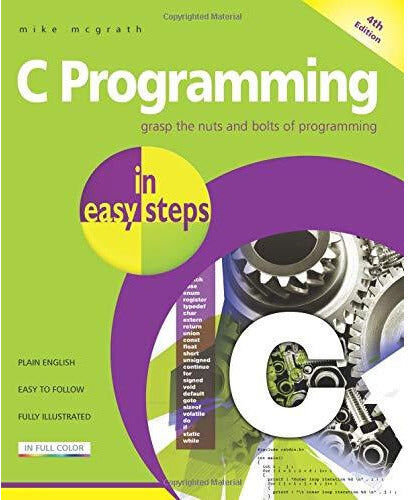
In Easy Steps Limited C Programming In Easy Steps 4th EditionC Programming in easy steps has an easy-to-follow style that will appeal to anyone who wants to begin programming in C, from programmers moving from another programming language, to the student who is studying C programming at school or college, or to those seeking a career in computing who need a fundamental understanding of procedural programming. C Programming in easy steps begins by explaining how to download and install a free C compiler so that you can quickly begin to create your own executable programs by copying the book's examples. You need have no previous knowledge of any programming language so it's ideal for the newcomer to computer programming. Each chapter builds your knowledge of C. C Programming in easy steps contains separate chapters on the major features of the C language. There are complete example programs that demonstrate each aspect of C together with screenshots that illustrate the output when that program has been executed. The sample code provided all has colored syntax-highlighting for clearer understanding. By the end of this book you will have gained a sound understanding of the C language and be able to write your own C programs and compile them into executable files that can be run on any compatible computer. Fully updated and revised since the third edition, which was published in April 2009.5,49 £*Shipping: 2,99 £Secure redirect to the provider
-
Learning Resources Pyxel The Coding PetKids use a computer or tablet to program this four-legged friend, then send their commands to the included remote to make the pet move, “talk”, and change facial expressions. Includes Coding Pet, user interface, and remote-activator unit. Pyxel The...124,99 $*Shipping: 0,00 $Secure redirect to the provider
-
What are the effects of non-coding DNA segments on traits?
Non-coding DNA segments, also known as non-coding regions or junk DNA, were once thought to have no functional significance. However, recent research has shown that non-coding DNA can have important regulatory roles in gene expression and can influence traits. For example, non-coding DNA can contain regulatory elements that control when and where genes are turned on and off, ultimately affecting an organism's traits. Additionally, non-coding DNA can also contribute to genetic variation and evolution by serving as a source of genetic diversity. Overall, non-coding DNA segments play a crucial role in shaping an organism's traits and genetic makeup. **
-
What is the programming language for website programming in the frontend and backend?
The programming language for website programming in the frontend is typically HTML, CSS, and JavaScript. These languages are used to create the structure, style, and interactivity of a website. In the backend, programming languages such as Python, Ruby, PHP, and JavaScript (Node.js) are commonly used to handle server-side operations, database interactions, and other backend functionalities. **
-
How can one use JavaScript for backend programming?
JavaScript can be used for backend programming by utilizing runtime environments like Node.js. Node.js allows developers to run JavaScript code on the server-side, enabling them to build backend applications. With Node.js, developers can create servers, handle requests, interact with databases, and perform other backend tasks using JavaScript. Additionally, Node.js has a vast ecosystem of libraries and frameworks that make backend development efficient and scalable. **
-
How can JavaScript be used for backend programming?
JavaScript can be used for backend programming through the use of runtime environments like Node.js. Node.js allows developers to write server-side code using JavaScript, enabling them to build scalable and efficient backend systems. With Node.js, developers can handle tasks such as server-side logic, database operations, and API integrations, making JavaScript a versatile language for full-stack development. Additionally, the npm ecosystem provides a wide range of libraries and modules that can be easily integrated into backend projects, further enhancing the capabilities of JavaScript for server-side programming. **
Similar search terms for Segments
-
In Easy Steps Limited C# Programming in easy steps, 2nd edition by Mike McGrathC# Programming in easy steps, 2nd edition will teach you to code applications, and demonstrates every aspect of the C# language you will need to produce professional programming results. Its examples provide clear syntax-highlighted code showing C# language basics including variables, arrays, logic, looping, methods, and classes. C# Programming in easy steps, 2nd edition begins by explaining how to install the free Visual Studio Community Edition, to create an environment in which you can quickly begin to create your own executable programs by copying the book's examples. It demonstrates all the C# language basics before moving on to provide examples of Object Oriented Programming. The book concludes by demonstrating how you can use your acquired knowledge to create graphic programs for traditional PC Desktop apps, and also as Universal apps for multiple devices. C# Programming in easy steps, 2nd edition has an easy-to-follow style that will appeal to: Anyone who wants to begin programming in C# The programmer who quickly wants to add C# to their skills set The hobbyist who wants to begin creating apps for their own computer The student, and to those seeking a career in computing, who need a fundamental understanding of C# programming Table of contents: Getting started Storing values Performing operations Making statements Devising methods Handling strings Accessing files Solving problems Creating objects Controlling events Building an application Targeting devices4,98 £*Shipping: 1,99 £Secure redirect to the provider
-
Miles Kelly Publishing Ltd. Get Set Go Skills for School 4 Wipe Clean Books Set Plus one Pen (Ages 4-7) (Computing and coding, Know your Numbers, Know Your Grammar & Science)Get Set Go Skills for School 4 Wipe Clean Books Set Help little learners build confidence before school with the Wipe Clean Workbooks: Get Set Go Skills for School Set of 4. Designed for children aged 4–7, this practical workbook collection supports key early learning areas through simple explanations, bright illustrations and fun wipe-clean activities that can be completed again and again. This set includes: Know Your Grammar Know Your Numbers Science Computing and Coding With wipe-clean pages and a handy pen included, children can practise essential skills, improve pencil control and enjoy a real sense of achievement as they learn. Perfect for home learning, school preparation, holiday activities or extra practice alongside classroom work.10,99 £*Shipping: 2,99 £Secure redirect to the provider
-
Inspired Finds No Coding Pet Glucose Monitoring Kit For Dogs & Cats analyzer KitManaging your pets health becomes easier and more reassuring with this easy to use pet glucose monitoring kit designed for dogs and cats. Built for convenient at home testing, this blood sugar monitor helps pet owners track glucose levels with fast...116,99 $*Shipping: 0,00 $Secure redirect to the provider
-
How do you calculate spherical segments?
To calculate the volume of a spherical segment, you first need to determine the height of the segment (h) and the radius of the sphere (r). Then, you can use the formula V = (1/6)πh(3r^2 + h^2) to find the volume. To calculate the surface area of a spherical segment, you need to know the radius of the sphere (r), the height of the segment (h), and the angle at the center of the sphere that defines the segment (θ). You can then use the formula A = 2πrh + (r^2(θ - sinθ)) to calculate the surface area. **
-
How do you calculate tangent segments?
To calculate tangent segments, you first need to identify the point of tangency where the tangent line touches the circle. Then, draw a radius from the center of the circle to the point of tangency. Next, draw a line perpendicular to the radius at the point of tangency to create a right triangle. Finally, you can use the Pythagorean theorem or trigonometric functions to calculate the length of the tangent segment. **
-
Why do we need lines and segments?
Lines and segments are essential in mathematics and geometry because they help us define and understand the relationships between points, shapes, and objects. They provide a visual representation of direction, distance, and orientation, allowing us to measure and compare different elements in a space. Lines and segments also play a crucial role in various mathematical concepts and calculations, such as finding slopes, determining angles, and solving geometric problems. Overall, lines and segments serve as fundamental building blocks in mathematics, enabling us to analyze and interpret the world around us. **
-
Why are mandarins made up of segments?
Mandarins are made up of segments because they are a type of citrus fruit that develops from multiple carpels, which are the individual sections of the fruit. Each segment contains juice-filled vesicles that are surrounded by a thin membrane, making them easy to separate and eat. This segmented structure also allows for easy peeling and consumption, making mandarins a convenient and popular snack. **
* All prices are inclusive of VAT and, if applicable, plus shipping costs. The offer information is based on the details provided by the respective shop and is updated through automated processes. Real-time updates do not occur, so deviations can occur in individual cases. ** Note: Parts of this content were created by AI.